
Ek Chaukane Wala Fact
SaaS Review Blogging duniya ka sabse high-CPC blogging niche hai — aur zyada tar Indian bloggers isko completely ignore karte hain।
Kyun ignore karte hain? Kyunki unhe lagta hai — “software reviews koi nahi padhta।”
Reality check: “Best project management software” — monthly 22,000 searches India mein। “Semrush vs Ahrefs” — 8,000 searches। “Notion review Hindi” — 3,400 searches।
Yeh sab commercial intent keywords hain — matlab jo person search kar raha hai, woh purchase karne ke kaafi karib hai।
Aur CPC? Software niche mein Google AdSense CPC ₹80-₹400 per click hai — general blogging ka 5-10x।
Hyderabad ke Vikram Reddy ne 2024 mein ek SaaS review blog shuru kiya। Sirf 18 mahine mein — ₹1.8 lakh monthly recurring income — AdSense plus affiliate commissions se।
Yeh koi fluke nahi tha। Yeh ek repeatable system hai — aur aaj hum woh system step by step cover karenge।
Is Article Mein
- SaaS Review Blogging exactly kaise kaam karta hai aur kyun yeh high-income niche hai
- Kaunse software categories mein sabse zyada earning potential hai
- Review articles kaise likhein jo Google par rank karein aur convert karein
- Monetization ke 3 streams — AdSense, affiliate, direct deals
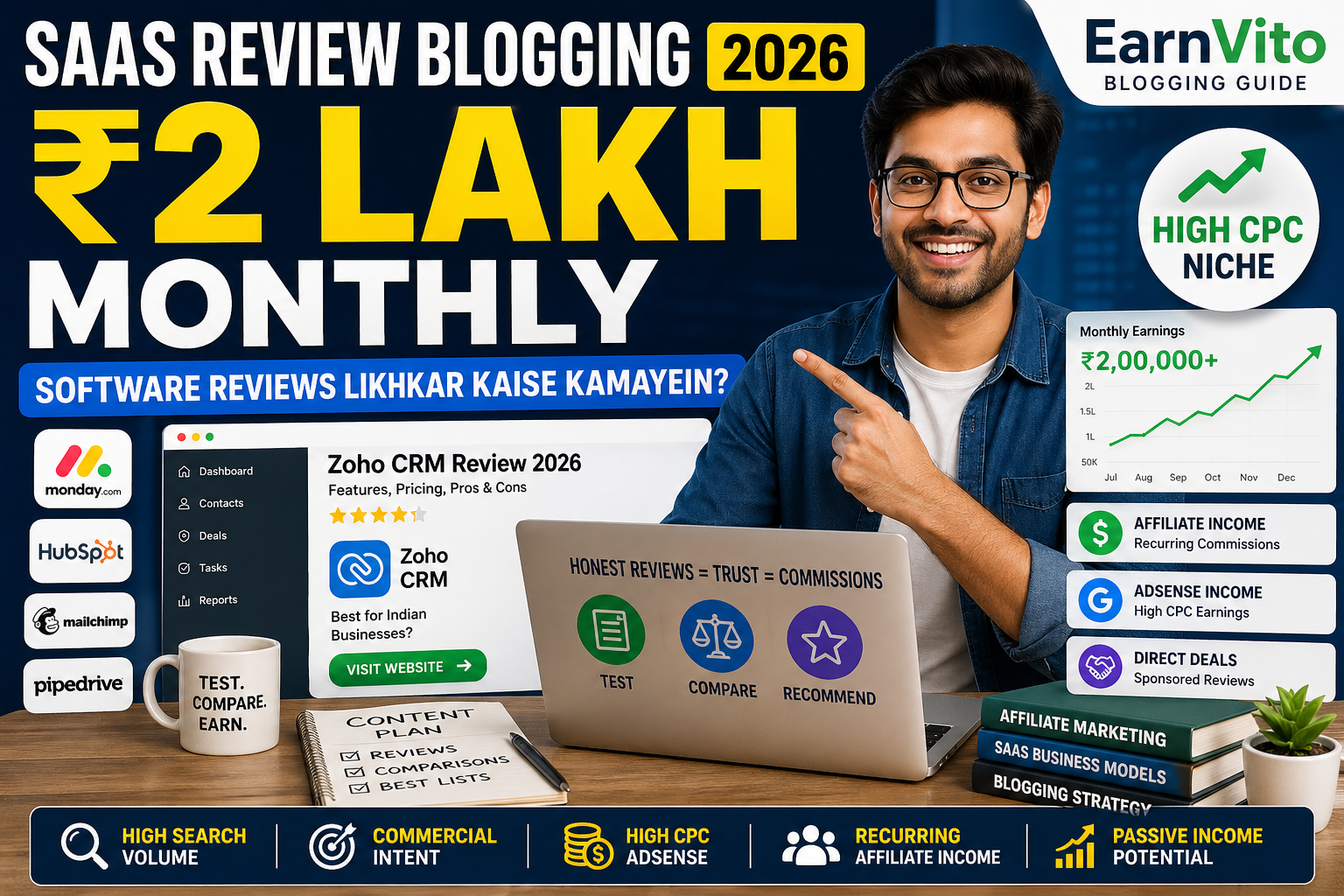
- ₹2 lakh monthly tak ka realistic roadmap
- Common mistakes jo review bloggers karte hain
Jump to: Core Concept | Niche Selection | Article Types | Monetization | Roadmap | FAQ
SaaS Review Blogging Kya Hai — Aur Kyun Yeh Gold Mine Hai {#concept}
SaaS (Software as a Service) review blogging mein aap software products ke detailed, honest reviews likhte hain — unhe test karte hain, features compare karte hain, pricing analyze karte hain — aur readers ko help karte hain sahi software choose karne mein।
Ab dhyan se samjho — yeh sirf “yeh software accha hai” likhna nahi।
Professional SaaS review blogging mein:
Features genuinely test kiye jaate hain — screenshots, real usage examples ke saath।
Competitors se comparison — “Notion vs Obsidian” style articles — jo highest traffic laate hain।
Specific use cases cover — “Best CRM for real estate agents India” — yeh narrow searches highest converting hoti hain।
Pricing breakdown — Indian rupees mein, GST implications, annual vs monthly savings।
Ek Bengaluru ke freelance developer Sameer ka example: Usne sirf “best code editor” ke upar 12 articles likhe — VS Code, Sublime Text, Atom, JetBrains comparisons। 9 mahine mein yeh 12 articles combined — 45,000 monthly visitors laane lage — sirf is ek sub-topic se।
Isliye SaaS Review Blogging high income deta hai:
Readers purchase decision lene ke kaafi karib hote hain — conversion rate naturally high।
Software companies hefty affiliate commissions deti hain — kyunki customer lifetime value (LTV) high hoti hai।
Google AdSense CPC software niche mein premium hoti hai — B2B advertisers zyada bid karte hain।
Sahi Niche Choose Karna — Yahan Decision Hota Hai {#niche}
SaaS Review Blogging mein ek badi galti yeh hoti hai ki log “general software review blog” banate hain — har tarah ka software cover karte hain।
Yeh approach kaam nahi karti। Google aur readers dono specialists ko prefer karte hain।
High-Earning SaaS Review Sub-Niches
Project Management Software
Search volume: Excellent। Competition: Medium।
Top keywords: “Best project management software India”, “Asana vs Monday.com”, “Trello alternatives 2026”
Affiliate programs: Monday.com (20% recurring), Asana (affiliate available), ClickUp (aggressive commission)
Average CPC: ₹120-₹280
CRM Software
Search volume: Very High। Competition: High — but long-tail mein gaps hain।
Top keywords: “Best CRM for small business India”, “Zoho CRM vs Salesforce”, “Free CRM tools India”
Affiliate programs: HubSpot ($250-$1,000 per customer), Zoho (15% recurring), Pipedrive (33% recurring)
Average CPC: ₹150-₹400
Email Marketing Tools
Search volume: High। Competition: Medium।
Top keywords: “Best email marketing tool India”, “Mailchimp alternatives”, “GetResponse vs ActiveCampaign”
Affiliate programs: GetResponse (33% recurring), ConvertKit ($200 per referral), AWeber (30% recurring)
Average CPC: ₹100-₹250
Accounting aur GST Software
Search volume: Very High in India specifically। Competition: Low-Medium।
Top keywords: “Best GST software India”, “Tally vs Zoho Books”, “Free accounting software India”
Affiliate programs: Zoho Books (15-20%), QuickBooks, FreshBooks
Yeh niche specifically Indian bloggers ke liye goldmine hai — kyunki Indian GST compliance ek unique pain point hai — international blogs yeh properly cover nahi kar paate।
Design aur Creative Tools
Search volume: High। Competition: Medium।
Top keywords: “Canva Pro review”, “Canva vs Adobe Express”, “Best design tools for non-designers”
Affiliate programs: Canva ($36 per Pro subscriber), Adobe ($85 per subscription)
Recommendation: Indian blogger ke liye GST/Accounting software ya CRM software niche — combination of high Indian search volume aur low international competition। Alternatively — project management ya email marketing — strong affiliate programs ki wajah se।
4 Article Types Jo SaaS Review Blog Ko Power Dete Hain {#types}
Article Type 1: Single Product Deep Review
Format: “[Software Name] Review 2026: [Main Benefit/Honest Opinion]”
Example title: “Zoho CRM Review 2026: Indian SMBs Ke Liye Sahi Hai Ya Nahi?”
Structure:
Quick verdict pehle — 2-3 lines mein overall opinion। Busy readers yeh dekhkar decide karte hain padhna hai ya nahi।
Genuine pros aur cons — honest hona zaroori hai। Fake positive reviews readers detect karte hain — aur trust khatam hoti hai।
Real screenshots — khud use karo, screenshots lo, annotate karo।
Pricing breakdown — monthly, annual, per user — Indian rupees mein।
Who should buy / who should not — yeh section highly converting hota hai।
SEO angle: Yeh articles “informational + commercial” intent capture karte hain।
Article Type 2: Comparison Articles — Highest Converting
Format: “[Software A] vs [Software B]: [Year] Mein Kaunsa Better Hai?”
Example: “Notion vs Obsidian 2026: Knowledge Management Ke Liye Kaunsa Chunein?”
Yeh format sabse zyada convert karta hai — kyunki reader already do options consider kar raha hai, purchase decision final stages mein hai।
Key elements:
Side-by-side feature comparison table — readers isko directly scroll karte hain।
Use case based recommendation — “agar aap X hain toh A better hai, agar Y hain toh B।”
Pricing comparison — total cost of ownership over 1 year।
Pro tip: Comparison article mein dono products ke affiliate links lagao — jo bhi khareedein, commission milegi।
Article Type 3: Best-of Lists — Highest Traffic
Format: “Best [Category] Software [Year]: [Number] Tools Tested aur Ranked”
Example: “Best Project Management Software India 2026: 8 Tools Honestly Reviewed”
Yeh articles highest organic traffic laate hain — “best X software” searches bahut common hain।
Structure:
Quick comparison table upar — readers impatient hote hain।
Each tool — 3-4 paragraphs — pros, cons, pricing, best for।
Clear winner section neeche।
Article Type 4: Alternatives Articles — Hidden Gold Mine
Format: “Best [Popular Software] Alternatives 2026: [Number] Options Tested”
Example: “Best Mailchimp Alternatives India 2026: 7 Cheaper Options Jo Better Hain”
Yeh articles surprisingly high traffic laate hain — kyunki:
Existing users frustrated hote hain — switch karna chahte hain।
Purchase intent very high hota hai।
Competition relatively low hota hai।
Professional Review Likhne Ka Process {#process}
Yahan most bloggers shortcut lete hain — aur yahi unhe average banata hai।
Top 1% SaaS review bloggers genuinely tools use karte hain।
Step 1: Free Trial Ya Free Plan Use Karo
Lagbhag sabhi SaaS tools free trial ya free plan offer karte hain।
Minimum 7-10 din genuinely use karo — daily tasks mein।
Notes lo real-time mein — kya frustrating laga, kya impressed kiya।
Step 2: Screenshots aur Screen Recordings
Every major feature ka screenshot lo — annotated।
Ek walkthrough video bhi banao agar YouTube channel hai।
Yeh original media aapki review ko competitors se genuinely alag banata hai।
Step 3: Pricing Verify Karo — Indian Context Mein
Official pricing page se current prices verify karo — AI se mat poochho, woh outdated hoti hai।
GST implications note karo — Indian business ke liye additional 18% GST matter karta hai।
Annual vs monthly savings calculate karo।
Step 4: Competitors Genuinely Compare Karo
Sirf ek tool review mat karo isolation mein।
Top 2-3 alternatives genuinely test karo — ya kam se kam research karo।
Honest comparison readers ko trusted advisor ki tarah treat karta hai।
Step 5: Review Update Karo — Regularly
SaaS tools rapidly change hote hain — features add hote hain, pricing change hoti hai।
Purani reviews — “last updated: 2023” ke saath — Google lower rank karta hai।
Calendar reminder set karo — har 6 mahine review update karo।
Monetization — ₹2 Lakh Ke Teen Streams {#money}
Stream 1: SaaS Affiliate Commissions — Primary Income
Yeh SaaS Review Blogging ka core income source hai।
Recurring commission programs — best return on effort:
| Program | Commission | Cookie | Per Customer/Month |
|---|---|---|---|
| HubSpot | $250-$1,000 one-time | 90 days | High one-time |
| GetResponse | 33% recurring | 120 days | $6-$40/month |
| Pipedrive | 33% recurring | 30 days | $15-$50/month |
| Monday.com | 20% recurring | 30 days | $8-$30/month |
| Zoho (India) | 15% recurring | 30 days | ₹300-₹1,500/month |
Math example:
50 active GetResponse referrals × average $15/month commission = $750/month = ₹62,500
Yeh passive income hai — ek baar refer karo, monthly milta rahe।
Stream 2: Google AdSense — Bonus Income
SaaS/software niche mein AdSense RPM (Revenue per 1,000 views) ₹300-₹800 hota hai — general blogs ka 4-6x।
10,000 monthly visitors × ₹500 RPM = ₹5,000/month sirf AdSense se।
50,000 monthly visitors = ₹25,000/month AdSense।
AdSense standalone kaafi nahi — lekin affiliate income ke upar achha bonus hai।
Stream 3: Direct Software Company Deals — Premium Income
Jab blog established ho jaaye — 20,000+ monthly visitors — software companies khud contact karti hain।
Sponsored review: ₹15,000-₹80,000 per article (established blogs ke liye)।
Annual partnership: Software company aapko exclusive affiliate rate ya flat monthly fee deti hai।
Product access: Premium tools free mein milti hain — aapka testing cost zero ho jaata hai।
₹2 Lakh Monthly Roadmap {#roadmap}
Month 1-3: Foundation Phase
Niche decide karo — ek sub-category par focus।
15-20 foundation articles likhо — 5 single reviews, 5 comparisons, 5 best-of lists।
Affiliate programs join karo — top 3 programs is niche mein।
Google Search Console setup karo — indexing track karo।
Expected income: ₹0-₹5,000 (affiliate sales shuru ho rahi hain)
Month 4-6: Growth Phase
Hafte mein 2-3 articles consistently publish karo।
Top performing articles identify karo — update aur expand karo।
Alternatives articles add karo — hidden traffic goldmine।
Email list banana shuru karo — software deal alerts ke liye।
Expected income: ₹8,000-₹30,000
Month 7-10: Scale Phase
Content calendar systematic banao — seasonal buying trends ke hisaab se।
Link building — doosre bloggers se genuine relationships banao।
YouTube channel shuru karo — same content video format mein — extra traffic + AdSense।
First direct company deals negotiate karo।
Expected income: ₹30,000-₹80,000
Month 11-18: Authority Phase
Site authority establish ho chuki hogi।
Top 3 rankings multiple commercial keywords par।
Direct deals + recurring affiliates + AdSense — teen streams active।
Expected income: ₹80,000-₹2,00,000+
Common Mistakes Jo Review Bloggers Karte Hain
Galti 1: Bina Use Kiye Review Likhna
AI se review generate kiya, publish kar diya। Readers real screenshots nahi dekhte, specific features ka honest assessment nahi milta — bounce rate high hoti hai, conversions zero।
Fix: Minimum free trial use karo — 7 din। Real screenshots lo। Authentic experience share karo।
Galti 2: Sirf Positive Reviews Likhna
Har software “excellent” hai — cons section mein sirf minor nitpicks। Readers trust nahi karte — woh jaante hain yeh affiliate-driven hai।
Fix: Genuine cons clearly state karo। “Yeh software X ke liye nahi hai” — yeh sentence paradoxically trust badhata hai aur conversion improve karta hai।
Galti 3: Pricing Update Na Karna
Software pricing quarterly change hoti hai। Outdated pricing information — reader ko loss hota hai — trust permanently khatam।
Fix: Calendar reminder set karo — har 90 din mein pricing check karo। “Last verified: [date]” clearly mention karo।
Galti 4: Broad Niche Lena
“Tech reviews” blog — har tarah ka software cover karna। Google topical authority nahi recognize karta।
Fix: Ek sub-niche — jaise “Indian GST aur accounting software reviews” — deeply cover karo। 50 excellent articles ek topic par — 500 thin articles across topics se better hai।
FAQ {#faq}
SaaS Review Blogging shuru karne ke liye koi technical knowledge chahiye?
Nahi — technical background helpful hai lekin compulsory nahi। Zyada tar SaaS tools no-code hain — genuinely use karna easy hai। Jo zaroori hai woh hai — curiosity, honest writing, aur patience। Agar aap clearly explain kar sakte hain “yeh tool ne mere kaam ko kaise help kiya ya nahi kiya” — toh aap already review blogger ban sakte hain।
Affiliate disclosure zaroori hai kya — Google penalty toh nahi hogi?
Disclosure compulsory hai — sirf ethical wajah se nahi, legal bhi hai। FTC guidelines aur Indian advertising standards dono require karte hain ki affiliate relationships clearly disclose ki jayein। Google penalty affiliate links se nahi hoti — unhelpful, thin, ya manipulative content se hoti hai। Honest disclosure actually trust badhati hai।
Kya ek hi software ke baad doosre version ya update review karna padta hai?
Haan — aur yeh ek ongoing kaam hai। SaaS tools monthly features release karte hain। “Major update” ke baad review update karo — title mein year add karo। Yeh regular updates Google ko fresh content signal dete hain — rankings improve hoti hain। Purani reviews jo update nahi hoti — धीरे धीरे rank se gir jaati hain।
Indian market ke liye kaunsi SaaS categories sabse zyada profitable hain?
GST aur accounting software India-specific goldmine hai — Tally vs Zoho Books vs QuickBooks types comparisons। HR aur payroll software — Indian compliance angle se। CRM tools — SMB focus ke saath। E-commerce tools — Shopify vs WooCommerce vs Indian alternatives. Yeh categories mein international competition kam hai, Indian search volume high hai।
₹2 lakh monthly target realistic hai kitne time mein?
Honest answer — 12-18 mahine consistent, quality work ke baad। Koi bhi 3-4 mahine mein yeh nahi pahunchta — jo claim kare woh mislead kar raha hai। Lekin jo 18 mahine consistently kaam kare — woh ₹2 lakh target achievable hai। Compound effect kaam karta hai — purane articles rank karte rahte hain, recurring affiliate income badhti rehti hai।
Conclusion
SaaS Review Blogging India mein abhi bhi relatively untapped niche hai — isliye ek significant opportunity window open hai।
Recap in 3 points: Ek sub-niche deeply cover karo, genuine testing se honest reviews likho, teen income streams simultaneously build karo।
Realistic expectation: 12-18 mahine consistent kaam ke baad ₹1-2 lakh monthly — yeh achievable hai, overnight nahi।
Aapki baari: Neeche comment mein batao — "Aap kaunse SaaS niche mein review blog shuru karna chahenge — aur kya aapne pehle koi software genuinely deeply use kiya hai?"
Article helpful laga toh apne blogging community mein share karo — kisi ke career ka turn around ho sakta hai।